







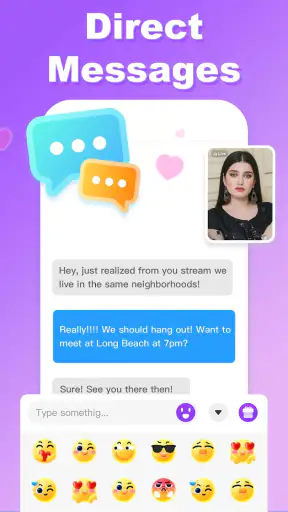
Some social apps are easy to understand in a minute but difficult to judge after the first burst of curiosity. MateMet - Live Video Call falls into that interesting middle ground: it combines video conversations, live broadcasts, and voice rooms in one place, so the first session feels active and varied. I found the appeal strongest when I wanted spontaneous contact rather than a carefully arranged call. The app is free to start, and its focus on live interaction makes it feel more immediate than a conventional messaging app.
That immediacy is also the main question for anyone considering a long-term download. A social app can be entertaining during its first week and still become background clutter later. My experience with MateMet is that its lasting value depends heavily on how comfortable you are with open-ended social discovery, live rooms, and the possibility that not every session will produce a meaningful conversation. It is not simply a replacement for a private messenger or a standard video-call utility.
What the first week feels like
The first thing I noticed is that MateMet is built around presence. Instead of opening it only to reply to someone I already know, I approached it as a place to see what conversations and live activity were available at that moment. That creates a different rhythm from apps where the main screen is a list of established contacts. Here, the experience is more exploratory, and the live format encourages quick decisions: join, watch, speak, or move on.
The app’s three main ideas work together naturally. Video chat is the most direct option when I want face-to-face interaction. Live streams are better suited to watching someone host a broader session, while voice rooms reduce the pressure of appearing on camera. That last option matters more than it might seem. Some people enjoy talking with strangers but do not want to manage their appearance, lighting, or camera angle every time they open a social app.
I would describe the first-week appeal as low-commitment social discovery. You can sample different types of interaction without deciding in advance that you are joining a particular community or maintaining a large profile. That makes the app approachable for someone who is bored with text-only feeds and wants a more human, live atmosphere.
A realistic use case is a quiet evening after work. I might open MateMet intending to spend only a few minutes, browse a live session, and then move into a voice room because I want company without the formality of calling a friend. If the room has a comfortable pace, the app can fill that small social gap surprisingly well. It is less useful when I need a precise outcome, such as arranging a meeting, sharing files, or having a private conversation with someone I already know.
Why the mixed format matters
Many alternatives specialize. A messaging app usually prioritizes people already in my contacts. A video meeting tool prioritizes scheduled calls and clear participation. A live-streaming service often puts the host and audience relationship at the center. MateMet brings these modes closer together, which is convenient when I want to switch from watching to speaking without leaving the same social environment.
The trade-off is that the experience can feel less focused. A user looking for a polished one-to-one calling tool may find the surrounding live activity distracting. Someone who prefers a carefully moderated interest community may also find the open social format less predictable than a platform organized around specific topics. MateMet’s strength is variety, not specialization.
The developer is MateMet Team, and the app has reached more than five million installs. That gives the service a meaningful pool of potential activity, which is important for any live social product. A live platform feels empty when few people are available, so a broad user base helps the first impression. Still, a large install figure does not guarantee that every room will suit my mood or that every interaction will be worthwhile.
Practical habits that improve the early experience
I got more from the app when I treated the first sessions as sampling rather than as a search for instant friendship. Joining the first available room and judging the entire service from it would be unfair. Live social spaces change quickly, and a room that feels slow or awkward may simply not match what I want at that moment.
I also found it useful to decide what kind of participation I wanted before opening the app. If I wanted conversation but not visibility, a voice room made more sense than video. If I wanted passive entertainment, a live stream was the better fit. This small choice reduced the feeling of wandering through unrelated activity and made the app feel more intentional.
Another useful approach is to keep personal boundaries clear from the start. Live social interaction can become personal quickly, especially when video is involved. I would avoid sharing sensitive details early, move away from conversations that become uncomfortable, and remember that the free entry point does not mean every possible interaction is equally valuable. MateMet is more enjoyable when curiosity is balanced with selectiveness.
Whether it earns a place month after month
The first week is about novelty, but the harder test is repetition. After the initial discovery period, MateMet needs to answer a simple question: what reason will bring me back tomorrow rather than once every few weeks? For me, the answer depends on whether I enjoy live social presence as a routine. If I regularly want casual conversation, spontaneous video, or voice-based company, the app has a repeatable role. If I only wanted to try live rooms once, its appeal fades much faster.
Its most durable use case is not necessarily long sessions. I can imagine opening it during a short break, checking whether a suitable voice room is active, and leaving once I have had enough conversation. That makes the app more sustainable than treating it as a destination that must occupy an entire evening. Short, purposeful visits reduce the risk of turning browsing into an endless habit with little social payoff.
The app’s average rating is 3.8 from roughly sixteen thousand ratings, which suggests a mixed but substantial response rather than universal enthusiasm. I read that as a useful warning against expecting a flawless social experience. Live platforms naturally vary with the people available, and an app can be technically usable while still feeling inconsistent from one visit to the next.
Who is likely to keep using it
MateMet is a good fit for people who enjoy meeting others through live formats and are comfortable with conversations that may be brief, unpredictable, or informal. It can also suit users who alternate between being active participants and quiet observers. The voice-room option makes it more flexible than a service where camera participation is the only meaningful way to join.
I think it is particularly suitable for someone who wants a social outlet that does not require planning every interaction. You do not need to coordinate schedules with a friend before exploring a room. That spontaneity is the app’s strongest recurring advantage, especially for users whose social time is irregular.
On the other hand, I would skip it if my main goal were dependable communication with family, colleagues, or close friends. A conventional messenger is better for keeping a conversation organized, while a dedicated video-call service is usually better when reliability and privacy are more important than discovery. MateMet should also be approached cautiously by anyone who dislikes meeting unfamiliar people online or who finds live social spaces mentally tiring.
The cost of staying engaged
The app is free to download and use as an entry point, but it includes in-app purchases ranging from $0.99 to $149.99 per item. That range makes spending awareness important. A user who enjoys live interaction can become more willing to pay during an emotionally engaging session, so I would decide on a personal limit before making any purchase rather than treating small transactions as harmless by default.
This is not automatically a flaw; many social platforms use optional purchases to support different forms of participation. The important point is that the free experience should be judged on its own. If I only enjoy the app when I am spending money, then it has not earned a stable place in my routine. I would first use it regularly without purchasing anything and then decide whether any paid element genuinely improves my experience.
The mature rating of 17+ is another reason to think about audience and boundaries before settling into the service. Live interaction is less predictable than a fixed article or a traditional utility, and the age guidance signals that it is intended for mature users. I would not treat the app as suitable for younger teenagers simply because video chat itself sounds familiar.
Maintenance, friction, and the reasons fatigue appears
Every social app asks for maintenance, even when that maintenance is not presented as a formal task. With MateMet, the main burden is attention. I have to decide which rooms deserve time, which conversations feel respectful, and when to leave. That is more work than opening a private chat with a known contact, where the purpose is already clear.
There is also a social maintenance burden. If I meet someone interesting, continuing that connection may require remembering where the interaction happened and deciding whether I want to return. If I do not want ongoing contact, I need to be comfortable ending a conversation without feeling obligated to stay. The app’s live nature makes these choices part of normal use rather than unusual events.
One non-obvious trade-off is that voice rooms can lower the barrier to participation while also making conversations harder to read. Without visual cues, pauses and tone carry more weight, and a room may feel welcoming or confusing depending on how people speak over one another. Video gives more context but demands more personal exposure. I would choose between them based not only on privacy, but also on how much social information I need to feel comfortable.
Another source of fatigue is the mismatch between availability and relevance. A room can be active without being interesting to me. That distinction matters because live activity creates a sense that I should keep searching when the current option is not a good fit. In practice, I found it healthier to leave quickly when a session was not right instead of trying to force value from it.
Live video can also create a higher emotional cost than text. A text message can be drafted and reconsidered; a live response is immediate. That makes MateMet more engaging, but it also means a user needs confidence in setting boundaries. I would not recommend using it when I am already overstimulated and looking for a calm, controlled way to communicate.
Keeping the app useful instead of letting it become noise
My preferred routine would be to open MateMet with a clear purpose, choose either watching, voice participation, or video conversation, and stop when that purpose is met. This prevents the app from becoming an automatic scrolling destination. It also makes it easier to judge whether the service is delivering recurring value or merely consuming spare time.
I would review my own usage after a few weeks rather than assuming frequent opening means genuine benefit. Am I having conversations I look forward to, or am I checking rooms because the app is available? Am I comfortable with the people I encounter, or am I repeatedly leaving sessions feeling drained? These questions are more useful than judging the app solely by how lively its interface seems.
Version 2.2.9 is the current version, and the app supports devices running Android 7.0 or later. That broad compatibility makes it accessible to many Android users, including people who do not own a recent phone. Even so, live video places practical demands on a device and connection, so I would expect the smoothness of a session to depend on the phone and network being used. A user with an older device should pay attention to how comfortably live video runs before making MateMet a daily habit.
Maintenance also includes deciding whether notifications and spontaneous activity fit my lifestyle. I prefer social apps that I can open deliberately rather than feel pulled back into throughout the day. If MateMet becomes a source of interruptions, its convenience may turn into friction. The best long-term relationship with it is probably intentional and occasional rather than permanently active.
My long-term verdict
MateMet - Live Video Call has a clear first-week advantage: it gives me several ways to interact in real time without forcing every visit into the same format. Video chat, live streams, and voice rooms serve different moods, and that variety is more meaningful than a single feature list suggests. I can watch when I want distance, speak when I want connection without a camera, or use video when face-to-face contact feels right.
Its lasting value is narrower but real. I would keep it installed if I enjoyed spontaneous conversations with unfamiliar people and could use the app without feeling pressured to stay, spend, or respond to every available room. The service works best as an optional social outlet, not as the central place for all communication.
The limitations are tied to the same design choice that makes it interesting. Open live interaction can be inconsistent, mentally demanding, and less efficient than a focused alternative. The mature audience, optional purchases, and need for personal boundaries mean it requires more judgment than a basic calling tool. Users seeking predictable contact with known people should choose a private messenger or dedicated video-call app instead.
My recommendation is therefore selective rather than automatic. Try it if you want live social discovery and appreciate having both camera and voice-based participation. Give it a fair first week, but judge it again after the novelty settles. If the app still gives you conversations you genuinely want to return to, it has earned space on your phone; if it only fills time, uninstalling it is the more honest choice.
MateMet Team has built an accessible social app with a useful mix of live formats, and its free starting point makes experimentation easy. I would not call it a universal replacement for established communication tools, but for the right user it can become a flexible way to find real-time company. The deciding factor is not how busy the app looks on the first day. It is whether the experience remains comfortable, worthwhile, and manageable after the excitement of trying something new has passed.


